
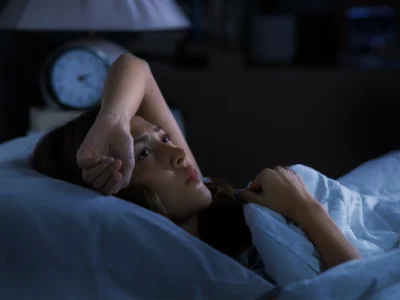
If you’re unable to sleep because of anxiety, you’re far from alone. In fact, anxiety is the most common mental health disorder in the U.S., affecting about 40 million people. And for many of those people, sleep problems are part of daily life.
The connection between anxiety and problems sleeping runs deep. When you feel anxious, your body goes into a state of hyperarousal. While this response can be helpful in truly dangerous situations, it becomes a problem when your brain stays in this mode at bedtime.
When you’re hyperaroused, your mind fills with worry and racing thoughts. Your body might feel tense, your heart rate increases, and you may even start sweating or breathing faster. These are not exactly the conditions your body needs for peaceful sleep.
To make things more complicated, anxiety disorders often occur alongside other mental health conditions like depression. This can make sleep problems from anxiety even harder to overcome without proper support and treatment.
What Happens if Sleep Problems Go Untreated?
The long-term complications extend far beyond feeling tired during the day. When sleep problems from anxiety continue for a long time without treatment, they can lead to serious health issues. People who struggle with ongoing sleep problems have a higher risk of developing conditions like diabetes, high blood pressure, and obesity.
Heart problems are also more common, including heart disease, heart failure, and even heart attacks. Some people develop irregular heartbeats, and the risk of stroke goes up as well.
This is not meant to scare you. Your mental health and physical health are connected. So taking care of one means taking care of the other.
What Is Sleep Anxiety?
Sleep anxiety refers to the fear or worry about going to sleep. To some, it might sound strange to be afraid of something as natural as sleeping. But for those who experience it, the fear is very real.
Sleep anxiety can feel different for everyone. Some people feel overwhelmed as bedtime approaches, while others become restless or irritable in the evening hours. Many experience a sense of impending danger or doom when they think about trying to sleep.
The physical symptoms can be just as troubling. A fast heart rate, rapid breathing, tense muscles, and trembling are all common. Some people have digestive problems or find they cannot concentrate on anything. These symptoms create a cycle where the fear of not sleeping actually makes it harder to fall asleep.
The Vicious Cycle of Sleeplessness and Anxiety
When you don’t sleep well, you feel more anxious the next day. And when you feel more anxious, you have an even harder time sleeping that night. This cycle can spiral quickly, leaving you exhausted and overwhelmed.
After a bad night’s sleep, your brain has less energy to manage stress and worry. Small problems feel bigger, you might snap at loved ones or struggle to focus at work, and as the day goes on, you start dreading bedtime because you know what’s coming.
That dread turns into anxiety, which keeps you awake again. And the cycle continues. Breaking this cycle takes effort, but it is absolutely possible. The key is addressing both the anxiety and the sleep problems at the same time.

What You Can Do to Help Yourself
The following changes won’t fix everything overnight, but they create a foundation for better rest:
Create a consistent sleep schedule.
Your body has a natural clock that thrives on routine. Going to bed and waking up at the same time every day (even on weekends) helps set this clock. It may feel hard at first, especially on days you’re exhausted and want to sleep in. But over time, your body will learn when it’s time to sleep and when it’s time to wake up.
Get natural light during the day.
Daylight plays a big role in setting your sleep patterns. Try to spend at least 30 minutes outdoors while it’s light out. Here in the Pacific Northwest, we know this can be challenging during the gray winter months. Even on cloudy days, natural light is still more powerful than indoor lighting. A morning walk can do wonders for your sleep that night.
Move your body, but not too late.
Regular exercise helps reduce anxiety and improves sleep quality. However, working out too close to bedtime can actually make it harder to fall asleep. An afternoon workout is ideal. It gives your body time to wind down before you need to rest.
Be careful with what you consume.
What you eat and drink matters more than you might think:
- Caffeine can take up to eight hours to wear off, so that afternoon coffee might still be affecting you at midnight. If you experience panic attacks, you may need to avoid caffeine entirely, as many people with panic attacks are extra-sensitive to it.
- Alcohol is another common culprit. While it might make you feel sleepy at first, it actually disrupts your sleep later in the night.
- Large meals and foods that cause heartburn can also keep you awake. Try to avoid heavy eating for several hours before bedtime.
- If you smoke, quitting is one of the best things you can do for your sleep and your overall health. Smoking affects sleep in many ways and makes both anxiety and sleep problems worse.
Create a sleep-friendly bedroom.
Your bedroom should be a peaceful space meant for sleep. Keep it cool, dark, and quiet. Remove distractions like TVs and computers. Avoid using electronic devices to read in bed. The light from screens tricks your brain into thinking it’s daytime.
If your mattress is uncomfortable, consider replacing it. Small changes to your sleep environment can make a big difference in how well you rest.
Wind down before bed.
Give your brain time to transition from the busy day to restful sleep. Reading a book, listening to soft music, taking a hot bath, or practicing deep breathing can all help. These relaxing activities signal to your body that it’s time to slow down.
Stop using electronic devices at least 30 minutes before bedtime. The blue light from phones and tablets interferes with your body’s natural sleep signals.
Use a 20-minute rule.
If you don’t fall asleep within 20 minutes of getting into bed, get up. Do something relaxing in low light until you feel sleepy, then try again. The same rule applies if you wake up in the middle of the night. Lying in bed frustrated and awake only makes the anxiety worse. Getting up and resetting helps break the cycle.
What Professional Treatments Include
When anxiety and sleep problems become too much to handle on your own, professional treatment can make all the difference:
- Cognitive behavioral therapy for insomnia (CBT-I) is one of the most effective treatments for sleep problems related to anxiety. It helps you identify and change the thoughts and behaviors that keep you from sleeping well.
- Medication options are available in several types, all of which can help with both anxiety and sleep problems. Anti-anxiety medications can reduce the mental hyperarousal that keeps you awake, and sleep medications can help you get the rest while you work on longer-term solutions.
When to Get Professional Help
Here are some signs that it’s time to reach out for professional help:
- If you’re struggling to fall asleep or stay asleep at least three nights per week.
- Experiencing significant daytime fatigue, trouble concentrating, or irritability.
- Ongoing or excessive worry that feels difficult to control.
- If you’ve started depending on alcohol, over-the-counter medications, or sleep aids to fall asleep.
Find Your Way Back to Restful Sleep
Being unable to sleep because of anxiety is exhausting and frustrating. It can feel like you’re stuck in a never-ending cycle with no way out. But there is a way forward. With the right support and treatment, you can break the cycle of sleeplessness and anxiety.
You don’t have to keep staring at the ceiling at 2 a.m. And you don’t have to dread bedtime or drag yourself through exhausted days. Real help is available, and it starts with reaching out.
We at Strong Mind Psychiatry understand how deeply sleep problems from anxiety can affect every part of your life. We’ve helped many patients reclaim their nights and wake up feeling rested and ready to face the day.
If you’re ready to take the first step toward better sleep and less anxiety, we’re here for you. Contact our office to schedule an appointment and start your journey toward the restful nights you deserve.